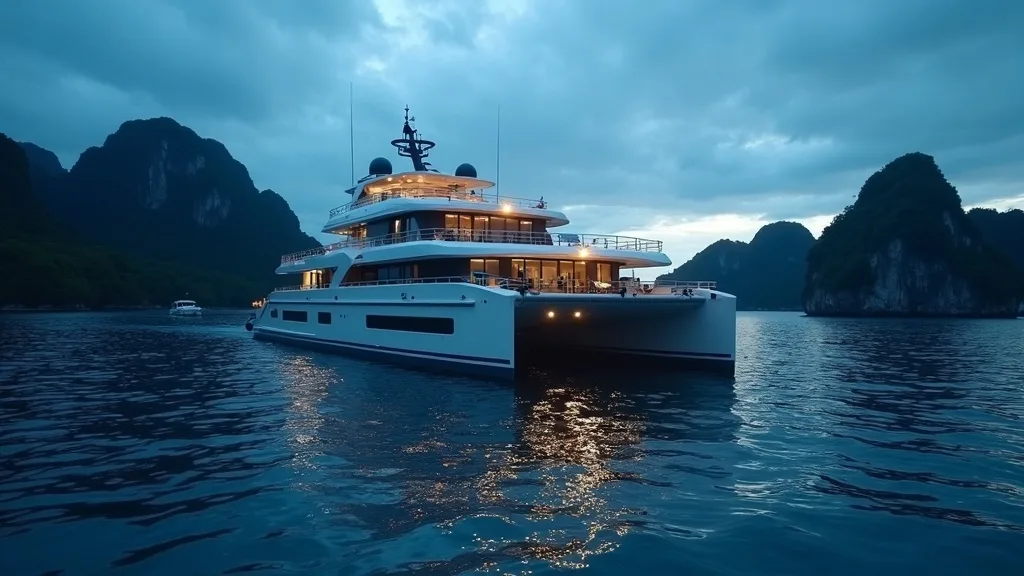
Cabin grade changes your Raja Ampat price more than any other single variable. On the same vessel, the same week and the same dives, a lower-deck twin and a master suite can differ by a factor of two or more. Understanding what Master, Deluxe, Superior, Twin and Front cabin actually mean is the difference between paying for comfort and paying for a label.
Phinisi and liveaboard operators across Indonesia use broadly the same cabin vocabulary, but there is no industry standard behind it. One boat’s “Deluxe” is another’s “Superior”. The words are marketing; the deck plan is fact. Learn to read the deck plan and the pricing stops being mysterious.
What do the cabin grades actually mean?
| Grade | Typical deck | Bed setup | Ensuite | Light | Relative price index |
|---|---|---|---|---|---|
| Master / Owner’s suite | Main or upper | King, sometimes a day bed | Yes, largest | Large windows, sometimes private access | 1.8 – 2.5× |
| Deluxe / Double | Main deck | Queen or king | Yes | Window | 1.3 – 1.6× |
| Superior | Main or lower | Double or twin convertible | Usually yes | Window or large porthole | 1.1 – 1.3× |
| Twin | Lower deck | Two single beds | Usually yes; sometimes shared | Porthole | 1.0× (baseline) |
| Front / Bow cabin | Lower, forward | Twin or double | Varies | Porthole or none | 0.85 – 1.0× |
The price index is relative to the cheapest cabin on the same vessel, not an absolute figure. Applied to real market bands — roughly USD 250–400 per person per night on mid-range dive vessels, USD 600–700 on boutique sailing yachts and USD 1,200–2,400 on luxury Phinisi — you can see why the same trip is quoted at wildly different prices depending on which cabin someone booked.
Does the deck matter more than the grade?
Often, yes. Four practical differences:
- Motion. Lower and midships is the most stable position on any vessel. If you are prone to seasickness, a lower-deck twin amidships will treat you better than a bow-facing suite on the upper deck, whatever the brochure says.
- Noise. Engine and generator noise is worst on the lower deck aft. Anchor chain noise is worst forward. Boats reposition overnight in Raja Ampat, so this is not theoretical — you will be aboard while the engine runs.
- Air conditioning. Upper-deck cabins with large windows take more sun and can struggle in the afternoon. Lower cabins hold cool better.
- Access to the dive deck. If you are doing four dives a day, walking up two flights in a wet suit ten times daily stops being charming by day three.
The most common upgrade regret we hear is a guest who paid for the top suite on a diving trip and spent the entire week on the dive deck. The most common downgrade regret is a couple on a honeymoon who saved money on a porthole cabin and then wanted to be in it.
How should solo travellers handle the single supplement?
Two options, and operators handle them differently:
- Cabin share. You are matched with another solo traveller of the same gender in a twin cabin and pay the standard per-person rate. This is the cheapest way onto a good boat, and on dive trips it works well — you will be in the water or eating for most of the day.
- Single supplement. You take the cabin alone and pay a premium, commonly somewhere between 30% and 100% of a second person’s fare depending on the vessel and how full the trip is.
Two negotiating points worth knowing. Supplements often soften on shoulder-season departures when boats want the cabin filled at all. And on a trip that ends up under-booked, some operators waive or reduce the supplement close to departure — though obviously you are gambling on availability at that point.
Which cabins actually fit a family?
Fewer than the marketing suggests. “Sleeps four” on a Phinisi frequently means two adults and two children in a bunk arrangement with one small bathroom. Before booking a family trip, ask three specific questions:
- What is the actual bed configuration — bunks, or two doubles?
- Are the two cabins adjoining, or on separate decks at opposite ends of the boat?
- What is the vessel’s minimum age, and does it change for diving?
In practice, two adjacent twin or superior cabins usually beat one nominal family cabin. For groups of eight or more, whole-boat charter often becomes cheaper per head than individual cabins — the private Phinisi charter page shows where that crossover falls, with whole-vessel rates starting around USD 4,500 per night for smaller boats.
What does a master suite actually buy you?
Space, light and privacy — in that order. A master suite typically means a genuinely large room, a proper bathroom rather than a wet-room compromise, windows you can see the sea from while lying in bed, and often a position away from the main cabin corridor.
What it does not buy: better diving, better food, or a different itinerary. Everyone eats the same dinner and dives the same sites. On a honeymoon or a milestone trip, the suite is the point — the room is where you will spend meaningful time. On a hard-charging dive week, the same money spent on a longer trip or a better vessel usually delivers more. Our honeymoon sailing charter page compares a master cabin on a shared yacht against a small private boat, which is the real decision for couples.
How do you read a deck plan before you pay?
Ask for the plan. Any serious operator has one and will send it. Then check:
- Where is the engine room, and which cabins share a bulkhead with it?
- Where are the generators, and do they run overnight?
- Which cabins are forward of the mast (more motion) and which amidships?
- Is the bathroom a separate compartment or a wet room with the shower over the toilet?
- Is there a window, a porthole, or nothing?
- How many steps between your cabin and the dive deck?
Reference points from the wider market: the largest Phinisi operating in Raja Ampat include a 57-metre three-masted schooner with nine cabins for up to eighteen guests, while boutique yachts may carry ten guests in five cabins. Mid-range dive liveaboards typically run fourteen to twenty guests across seven to twelve cabins, and expedition motor vessels reach twenty-six to thirty. These are market reference figures rather than our own fleet — but they tell you what guest-to-space ratio to expect at each level.
Guest count matters as much as cabin grade. Twenty guests sharing one dive deck creates queues; ten guests on the same platform does not. Cross-check against the 7D6N sailing package inclusions, and see our notes on power and connectivity onboard if charging camera gear in your cabin matters to you.
Frequently asked questions
What is the difference between a master and a deluxe cabin?
A master or owner’s suite is the largest cabin, usually on the main or upper deck with big windows and the best bathroom. Deluxe sits below it — still main deck and ensuite, but smaller. Definitions vary by vessel, so check the deck plan.
Which cabin is best if I get seasick?
Lower deck, amidships. Motion is least where the vessel pivots. Avoid forward cabins, which rise and fall most, and be aware that boats reposition overnight in Raja Ampat.
How much is the single supplement on a Raja Ampat liveaboard?
Commonly 30% to 100% of a second fare, depending on vessel and occupancy. Many operators also offer same-gender cabin share at the standard rate, which avoids the supplement entirely.
Do all cabins have private bathrooms?
On most modern Phinisi and dive liveaboards, yes. Older or budget vessels sometimes have shared facilities for the forward or lower cabins. Confirm before booking rather than assuming.
Is it worth upgrading to a master cabin?
For honeymoons, milestone trips and anyone who values the room itself, yes. For a heavy diving schedule, the same money often buys more as extra nights or a better vessel.
Can a family of four share one cabin?
Sometimes, usually with bunks and one bathroom. Two adjacent twin cabins is generally more comfortable, and for larger groups a whole-boat charter can be cheaper per person.
Do lower-deck cabins have windows?
Portholes rather than windows, and some forward cabins have neither. If natural light matters to you, this is a main-deck decision.
Does cabin grade affect diving or food?
No. Everyone dives the same sites and eats the same meals. Cabin grade buys room, light and privacy — nothing else.
Pick the right cabin, not the most expensive one
Tell us who is travelling, how you sleep and how much diving you plan, and we will recommend a cabin — including when the cheap one is the right answer. Reservations are handled by Komodo Luxury, our parent operator since 2015, part of Juara Holding Group.
WhatsApp: +62 811 3823 875 · Email: [email protected]