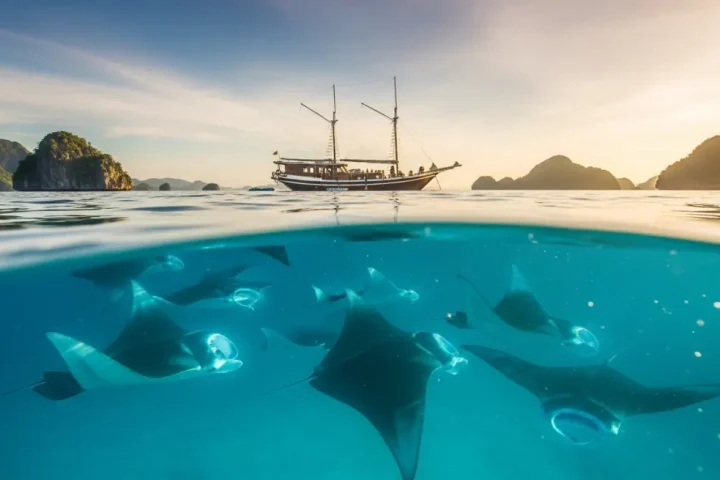
Wide-angle wins in Raja Ampat. The reefs, the schooling fish, the mantas and the limestone arches are all wide-angle subjects, and a week here shot on macro is a week of missed opportunities. Bring macro only if your itinerary includes Batanta, mangrove sites or dedicated muck days — otherwise pack one wide setup and shoot it properly.
Raja Ampat punishes indecision. Divers who change ports and lenses every dive spend the trip fighting their equipment while the reef does its thing overhead. The photographers who come home with a portfolio are almost always the ones who committed to a setup on day one.
What setup suits which Raja Ampat subject?
| Subject | Setup | Where | Difficulty |
|---|---|---|---|
| Reefscape and coral gardens | Fisheye or wide zoom, dome port, dual strobes | Melissa’s Garden, Fiabacet, Friwen Wall | Moderate |
| Schooling fish and pelagics | Wide zoom (16–35 equivalent), strobes off or low | Cape Kri, Sardine Reef, Blue Magic | Hard — current |
| Mantas | Fisheye or wide zoom, ambient light, no aggressive flash | Manta Sandy, Magic Mountain | Moderate |
| Limestone arch silhouettes | Fisheye, dome port, model diver, ambient exposure | Boo Windows, Goa Besar | Hard — requires planning |
| Jetty and light shafts | Fisheye, shallow, mid-morning sun | Arborek jetty, Yenbuba | Easy |
| Nudibranchs and macro critters | 60–105 mm macro, snoot optional | Batanta, mangrove edges, night dives at Mioskon | Moderate |
| Wobbegong sharks | Wide or mid-range; they do not move | Mioskon | Easy |
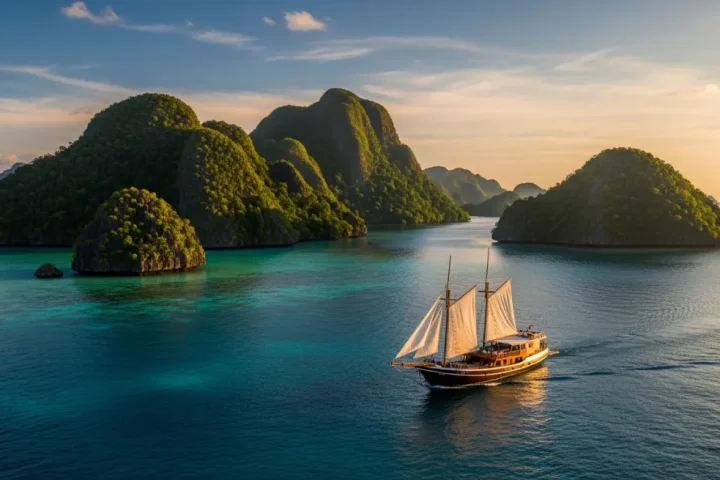
| Topside karst landscapes | 24–70 equivalent, polariser, early or late light | Piaynemo, Wayag, Telaga Bintang | Easy |
Two technical notes worth internalising. Visibility here is commonly 15–30 metres but drops in plankton-rich weeks — get close, shoot up, and keep the water column between lens and subject as short as possible. And current is the defining constraint at the best sites: a rig with big strobe arms is a sail. Streamline it, or accept that you will not hold position at Blue Magic. Our Dampier Strait site guide sets out which sites those are.
How does the camera table work onboard?
Every serious dive vessel has a dedicated camera table — a padded surface with power outlets, usually in a shaded area of the deck — and a separate rinse tank reserved for cameras. The etiquette is unwritten and immediately obvious when someone breaks it:
- The camera rinse tank is for cameras only. Not masks, not fins, not wetsuits. Nothing that sheds sand.
- One rig in the tank at a time, and take it out when it has soaked. A stack of housings knocking together is how ports get scratched.
- Claim your space and stay in it. Tables are allocated informally on day one; spreading into a neighbour’s area by day four is noticed.
- Handle only your own equipment. If you need to move someone’s rig, ask.
- Dry hands before opening a housing. Obvious, routinely ignored, and the single most common cause of a flood.
Ask the crew to hand your camera down to you after you enter the water, and to take it before you climb the ladder. Every boat does this. Divers who try to climb a ladder in swell holding a camera are how housings end up on the seabed.
What is the power and backup plan?
Indonesian vessels typically run 220V with round two-pin European-style sockets, powered by a generator. Some boats shut the generator down overnight, which means cabin sockets are dead while you sleep — the exact hours you were counting on for charging. Ask before you board; full detail is in our guide to Wi-Fi, Starlink and power onboard.
A workable routine for a four-dive day:
- More batteries than charging slots. Three camera batteries minimum, and a second set for strobes and focus lights.
- Charge during the day, not overnight, unless you have confirmed the generator runs.
- Two card readers — they fail, and there is no replacement within a thousand kilometres.
- Back up every evening to two destinations. Laptop plus one external drive, or two drives. Do it before dinner, when you still have the discipline.
- Bring a multi-socket adapter. Cabins often have one or two outlets total.
- Spare O-rings, silicone grease, a blower and a microfibre cloth. Small, light, trip-saving.
Can you fly a drone in Raja Ampat?
Ask first, every time. There is no clearly published Raja Ampat-specific drone regulation in English, so the practical framework is: Indonesian national aviation rules apply, village and park permission matters, and many vessels restrict guest drones outright. Start by asking the cruise director, not by unpacking the drone.
Where flying is permitted, the operational reality:
- Wind. The karst channels create unpredictable gusts and rotors. Sheltered lagoons are easier than exposed ridgelines.
- Launching from a moving boat is a genuine skill. Hand launch and hand catch from a tender, and only in calm conditions. Losing a drone at sea is entirely normal here.
- Villages. Never fly over a village or over people without explicit permission. The noise is intrusive in a place this quiet, and the offence taken is real.
- Wildlife. Do not fly low over mantas, turtles or nesting birds.
Accept a refusal without argument. Guests who negotiate over drone permissions are the reason more boats have banned them.
What about topside photography?
Underrated, and in some cases the strongest images of the trip. The Piaynemo staircase viewpoint and the Wayag hike deliver the karst panoramas that define Raja Ampat visually — and both are best in early light, before haze builds and before the heat makes the climb unpleasant. A polariser is worth carrying purely for those two shots.
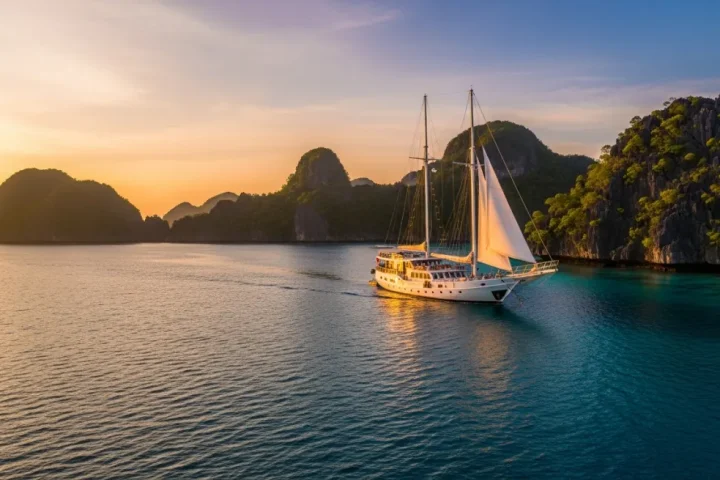
Golden hour on deck is the other easy win: anchored among limestone islands with the light going orange, a crew member coiling a line, the tender coming back from a sunset snorkel. Shoot it. Our Piaynemo and Fam Islands trip is built around the viewpoints, and Kabui Bay and Telaga Bintang offers the archipelago’s most photogenic sheltered water.
How do you manage baggage weight?
Indonesian domestic allowances are usually tighter than the international ticket that brought you, and a housing, ports, strobes, arms and a laptop add up fast. Pre-purchase extra weight online rather than negotiating at the check-in desk. Carry the housing, ports, camera body and laptop in your cabin bag — everything replaceable goes in the hold, everything irreplaceable stays with you. A soft padded case beats a hard shell for cabin storage on a boat, where space is genuinely scarce. Private charter guests have more room to spread out; see the private Phinisi charter page.
Frequently asked questions
Should I bring wide-angle or macro to Raja Ampat?
Wide-angle, unless your itinerary specifically includes Batanta, mangrove sites or dedicated muck diving. The signature subjects here are reefscapes, schooling fish, mantas and arches.
Can I take a drone to Raja Ampat?
Ask your operator first. Indonesian national aviation rules apply, village and park permission matters, and many vessels restrict guest drones. Never fly over villages or people without explicit consent.
How many batteries should I bring for a liveaboard week?
At least three camera batteries plus a second set for strobes and focus lights, because some vessels shut down the generator overnight and cabin sockets are limited.
Is there a camera table on Raja Ampat liveaboards?
On serious dive vessels, yes — a padded table with power and a dedicated camera rinse tank. Use the rinse tank for cameras only, one rig at a time.
Should I use flash when photographing mantas?
Keep it restrained or shoot ambient. Never fire into an animal’s eye at close range, and stay behind the viewing line at cleaning stations. Behaviour rules override the shot.
Do I need a domestic baggage allowance upgrade for camera gear?
Usually yes. Buy the extra weight online in advance rather than at the airport, and carry housing, ports, body and laptop in your cabin bag.
Tell us what you shoot
Send us your setup and shot list and we will match you to an itinerary and a vessel with the deck space, camera table and tender support you need. Charters are operated by Komodo Luxury, an Indonesian charter company sailing since 2015.
WhatsApp: +62 811 3823 875 · Email: [email protected]